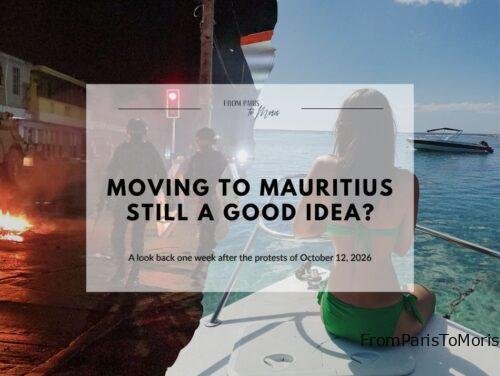
Published on 19 October 2026. I will update this article if the situation changes.
Over the past few days, a lot of people have been asking me whether everything is OK in Mauritius. I understand: the images that circulated in the media can be worrying.
My short answer, after 8 years here: yes, things are OK, and yes, moving to Mauritius is still a good idea if your project is well prepared.
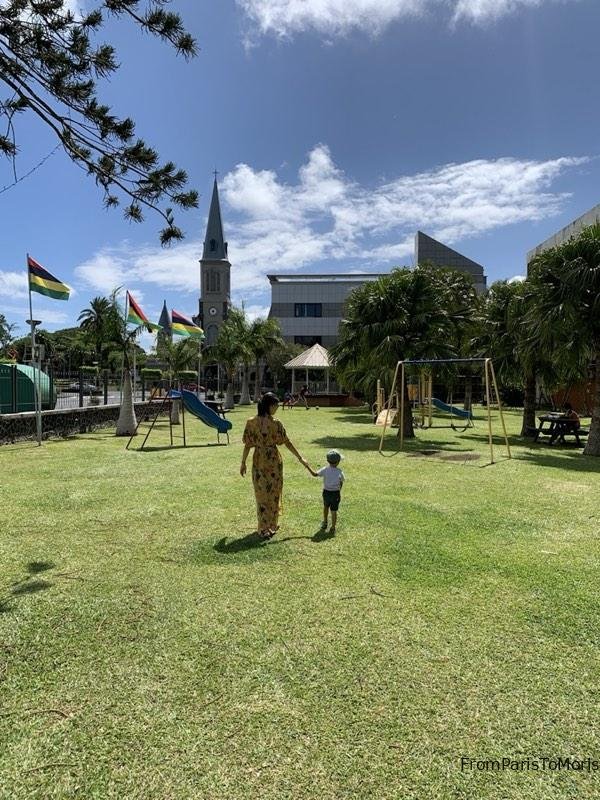
I won’t tell you that nothing happened, because that would be false. But I won’t tell you the island is up in flames either, which would be just as false. Here is what really happened, why, where things stand a week later, and what it changes (or doesn’t) for your project.
What happened, in short
Here are the facts, as reported by the local and international press:
- Early October: residents of several neighbourhoods (Phoenix, then Camp-Levieux) protest spontaneously against water cuts and the high cost of living, sometimes blocking roads.
- Friday 9 October: a 27-year-old woman, who was returning from work in a van, is shot and wounded by a police officer in Camp-Levieux. The officer was arrested and the investigation is ongoing.
- Night of 12 to 13 October: anger escalates. Burning barricades, clashes with the police, looted shops (including two supermarkets), a police station set on fire, and damage reported on the Metro Express.
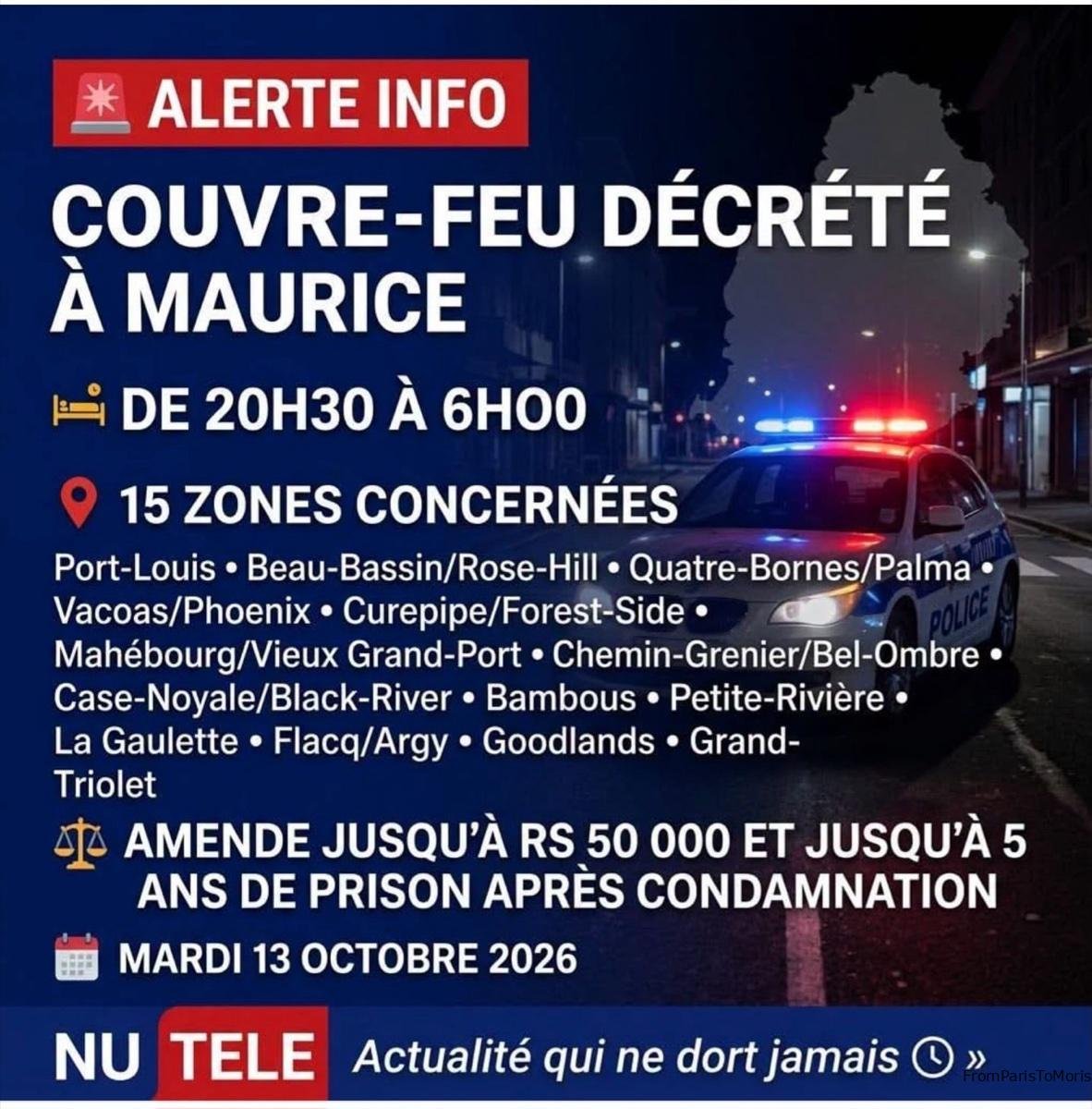
- Tuesday 13 October: the Prime Minister declares a curfew from 8:30 pm to 6 am in ten regions, about a third of the island. Schools close from Tuesday 13 to Friday 16.
- Until Sunday 18 October: the curfew is extended as a precaution, with shorter hours (10 pm to 4:30 am) over the weekend of 17 and 18.
- Monday 19 October: schools reopen.
- Figures released by the authorities on 14 October: 94 arrests (including 16 minors) and 7 police officers injured.
Why this anger? A general fed-up feeling
You have to understand it: these events did not come out of nowhere. The shooting was the spark, but the anger had been building for months.
Water. For several weeks, reservoirs have been low and many neighbourhoods have suffered prolonged cuts. From 5 August, water distribution was reduced by two hours a day across the country, and some regions (Plaines-Wilhems, Moka, part of Rivière-Noire) saw cuts of five to six hours a day. On top of that, the network is ageing: according to official figures quoted in recent years, more than half of the water distributed is lost to leaks before it reaches the tap.
The cost of living. Inflation, electricity, fuel: at the end of September, petrol went up another 10% (Rs 77.70 per litre). Budgets are shrinking, and the most modest families are hit first. I cover this in detail in my article on the cost of living in Mauritius in 2026.
Feeling unheard. According to several local observers, part of the Mauritian population also feels distrust towards those in power: the impression that everyday difficulties are not taken seriously enough.
This anger is legitimate and understandable. When you have no water for days, your bills keep rising and you feel nobody is listening, you end up saying it out loud. Violence and looting are not a solution, but the underlying cry is perfectly understandable.
The Mauritians I have known since 2018 remain a peaceful people, attached to living together. That is precisely why this episode is so rare.
The measures taken to prevent any escalation
The authorities reacted quickly, with precautionary measures designed to keep the situation from getting worse:
- A curfew from 8:30 pm to 6 am in the ten most affected regions, declared on Tuesday 13 October, then extended as a precaution until Sunday 18 (10 pm to 4:30 am over the weekend).
- School closures from Tuesday 13 to Friday 16 October, to protect students and avoid unnecessary travel.
- Reinforced security on the ground, with the arrests communicated by the police.
- Official announcements from the government and the police, published day by day to keep the public informed.

These decisions had an effect: they allowed the authorities to regain control within a few days, without the situation spreading across the whole country.
Where do things stand today?
The curfew, extended as a precaution until Sunday 18 October, is no longer in force, the police said the situation was under control, and schools reopened this Monday, 19 October. Since then, life has resumed across the island. Some aftereffects remain: according to the local press, the Barkly station of the Metro Express was still out of service on 18 October.
I won’t pretend nothing happened either. Further gatherings remain possible, as the French Embassy reminded its nationals, and the authorities remain on alert.
On water, the Council of Ministers had already decided on first measures on 9 October, before the escalation: nine additional boreholes brought into service, water drawn from certain rivers, and liaison officers recruited to coordinate distribution. Let’s hope these measures bear fruit, and that the government truly hears and listens to what was expressed in the streets.
One thing remains clear: on the scale of the island, the episode stayed limited in time (about a week) and in space (a third of the territory was under curfew, mostly on the outskirts of towns).
What the media show, and what I see here
The images going around (burning tyres, a police station in flames) are real. But they show a few localities, over a few nights, and they give the impression of a whole country in flames. That is not what we experienced: the violence was concentrated in about ten regions, mostly at night, and the authorities regained control within a few days.
A week later, life has resumed its rhythm, and children went back to school this Monday. That is what I see around me, and it is what police and government statements confirm.
A rare episode in Mauritius
In 8 years in Mauritius, this is the first time I have experienced anything like this. To find comparable scenes, you have to go back to 1999, when the death in custody of the singer Kaya triggered several days of riots. Since then, more than a quarter of a century has passed without unrest of this scale. The international press continues to describe Mauritius as one of the most stable democracies in Africa, and this episode, however striking, looks like an exception rather than the rule.
And in France? Putting things in perspective
I see a lot of comparisons going around. I am not trying to downplay what happened here, nor to set two countries against each other: both are going through tensions linked to the cost of living. What differs is the scale. In Mauritius, an episode of about a week, with a curfew over a third of the island. In France, the day of mobilisation on 17 October announced more than 1,000 actions across the country, in a climate of high living costs and student anger present since late September.
Are expats affected?
According to the French Embassy, the French community is not being targeted by these events. The demands expressed are about water and the cost of living.
I also want to be honest about something you may have seen on social media: some Mauritians are fed up with rising property prices, and by extension with the visibility of foreigners who buy. It is a real debate: prices have risen by more than 138% since 2019, and access to home ownership is becoming harder for many locals. It is not a reason to stay away, but it is a reason to come with respect: truly integrate, respect the local culture, and learn a few words of Creole.
What if you are coming for a trip or a scouting visit?
This question also comes up for people planning a holiday or a scouting trip before moving. The events were concentrated in localities in the centre of the island, and the curfew is no longer in force. On official advice, France called for vigilance in the affected localities and for respecting curfews where they apply.
Before you leave, my advice: confirm your flight directly with your airline, check your government’s travel advice, and keep some flexibility on public transport trips, as some services have been disrupted.
So, is moving to Mauritius still a good idea?
My answer, after 8 years here: yes, but with your eyes open.
Mauritius remains an island where life is good, with a quality of life, a level of safety and a tax system that appeal to many. But it is not a postcard: water, the cost of living and housing are real issues. Those who settle in peacefully are those who prepared their project.
What I recommend, concretely:
- Choose your area based on water. Find out about cuts in the neighbourhood you have in mind, and before signing a lease, check that the home has a tank and a pump in good condition.
- Follow local media (Le Mauricien, L’Express, Defimedia) and official announcements when the situation is tense.
- If you are French, register on the Registre des Français établis hors de France, and keep the contact details of the French Embassy at hand. Otherwise, check what your own embassy offers.
- If there is a gathering or a roadblock, avoid the area and adjust your journeys.
- Plan a realistic budget, including water, electricity and fuel (my cost of living guide helps you build one).
Do you have questions about your project?
If these events make you hesitate, that is normal, and that is exactly why I offer 1-hour calls: we go over your situation, your eligibility and the areas that suit you, and I answer you frankly, the good and the less good. You leave with a personalised recap and a free resource sheet.

Book an expat coaching session (50€)
Read also
Sources
- Curfew and Council of Ministers, Outre-mer La 1ère (in French)
- Curfew extended until 16 October, Africanews (in French)
- Mauritius tightens security and extends curfew, Associated Press
- Mauritius imposes curfew to calm days of protests, Associated Press
- Mauritius temporarily closes schools after night of unrest, Reuters
- Water stress and Council of Ministers measures, AllAfrica (in French)
- Water restrictions from 5 August, AllAfrica (in French)
- 17 October mobilisation in France, Public Sénat (in French)