Exchange rate used: €1 ≈ 52 MUR (Mauritian rupees) — indicative rate for 2026
People often ask me the same question: “Is it really expensive to live in Mauritius?”
The honest answer? Yes. And no. It all depends on your lifestyle, the area where you settle, and your spending habits.
After 7 years in Mauritius, I’ve lived in different neighbourhoods, watched prices evolve, and helped many expats with their relocation. In this article, I’m giving you the real numbers — not what you’d find on forums from 2019, but verified 2026 data, cross-checked with my own experience on the ground.
What you’ll find here:
- Housing costs by area
- Groceries and food
- Fixed expenses (electricity, water, internet)
- Transport
- School and healthcare
- A realistic monthly budget breakdown
- My honest take after 7 years on the island
1. Housing — The Biggest Expense

This is often where new arrivals get the biggest surprise. The Mauritian property market has changed dramatically in recent years — prices have risen by more than 138% since 2019.
Good news for 2026: According to the Mauritius Real Estate Index 2026 by PropertyCloud, rents for expats are down 5.3% — the first decline in several years. It’s a good time to negotiate.
Rental prices by property type
| Property type | Monthly rent (MUR) | Monthly rent (€) |
|---|---|---|
| Studio / 1-bed west coast | 15,000 – 25,000 | ~€290 – €480 |
| 2-bed apartment Grand Baie/Tamarin | 25,000 – 40,000 | ~€480 – €770 |
| 3-bed house with garden | 55,000 – 100,000 | ~€1,060 – €1,920 |
| Villa with pool | 75,000 – 130,000 | ~€1,440 – €2,500 |
Prices by area
Grand Baie (North) — most popular area for French expats
- 2-bed apartment: MUR 60,000 – 70,000 (~€1,150 – €1,350)
- Lively atmosphere, restaurants, active social scene
- The most expensive and most touristy area
Tamarin / West coast — residential feel, close to nature
- 2-bed apartment: MUR 20,000 – 35,000 (~€385 – €670)
- 3-bed villa with pool: MUR 100,000 – 130,000 (~€1,920 – €2,500)
- Very popular with families
Flic en Flac — great value for money by the beach
- Apartment: under MUR 50,000 (~€960)
- House: from MUR 65,000 (~€1,250)
Inland areas (Quatre Bornes, Plaines Wilhems) — the budget-friendly alternative
- 20 to 30% cheaper than coastal areas (except Moka Smart City)
- Modern infrastructure, good connectivity
- Ideal for remote workers
⚠️ Worth knowing: Leases are typically signed for 1 year, automatically renewed. Budget for 1 month deposit + 1 month rent upfront. If you go through an agency, add 1 month commission.
⚠️ Before you sign: Landlords in Mauritius are legally entitled to raise the rent by up to 10% per year. On a MUR 50,000 rent, that’s MUR 5,000 extra every year. Try to negotiate a rent freeze clause, or lock in a fixed rate for 2–3 years.
My advice: Always rent before buying. Live in different areas before committing.
2. Groceries and Food
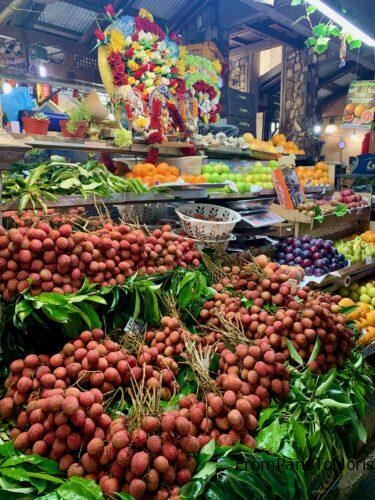
This is often the most surprising expense for newcomers. The reality: if you eat like you did back home, you’ll pay European prices — or more.
Local market vs supermarket
At the market:
- Green vegetables (brèdes): MUR 60 – 100/kg (~€1.15 – €1.90)
- Tomatoes: MUR 80 – 160/kg (~€1.55 – €3.00)
- Realistic budget shopping local: MUR 8,000 – 10,000/month per person (~€155 – €190)
At the supermarket (Super U, Intermart, Winner’s):
- Local products: affordable
- French imports (cheese, wine, cold cuts): 2 to 3x the French price
- Realistic mixed budget: MUR 12,000 – 15,000/month per person (~€230 – €290)
Cheap vs expensive products
| Cheap — Local products | Expensive — Imported products |
|---|---|
| Bread | Wine |
| Chicken | Cheese |
| Rice, flour | Red meat |
| Tinned sardines | Alcohol (especially champagne!) |
Monthly grocery budget for a family of 4
| Profile | Monthly budget |
|---|---|
| Mostly local products | MUR 25,000 – 35,000 (~€480 – €670) |
| Mix of local and imported | MUR 40,000 – 50,000 (~€770 – €960) |
| European-style (mostly imported) | MUR 60,000+ (~€1,150+) |
Eating out
- Street food / dholl puri: MUR 15 – 300 (~€0.30 – €5.75)
- Mid-range restaurant: MUR 800 – 1,500 per person (~€15 – €29)
- Fine dining / hotel restaurant: MUR 2,000 – 5,000 per person (~€38 – €96)
- Big Mac: ~MUR 240 (~€4.60) / Big Mac Meal: ~MUR 370 (~€7.10)
- Cappuccino: ~MUR 150 (~€2.90)
- Phoenix beer (supermarket): ~MUR 60 (~€1.15)
3. Fixed Monthly Expenses
Electricity ⚡
The electricity bill has tripled over the past 10 years according to long-term expats on the island.
- Without air conditioning: MUR 3,000 – 5,000/month (~€58 – €96)
- With air conditioning (summer): MUR 8,000 – 12,000/month (~€154 – €230)
- With pool + air conditioning: up to MUR 15,000/month (~€288)
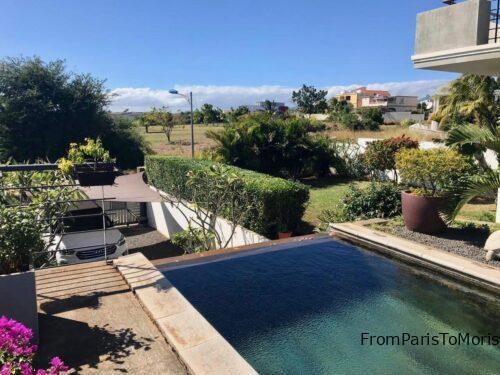
What drives the bill up: air conditioning, pool pump, electric water heaters.
Water 💧
~MUR 300 – 500/month (~€6 – €10) — very affordable
Internet & telecoms 📡
- Fibre 200 Mbps + TV (Canal+): ~MUR 2,000/month (~€38)
- Mobile data plan 200GB: ~MUR 315/month (~€6)
4. Transport
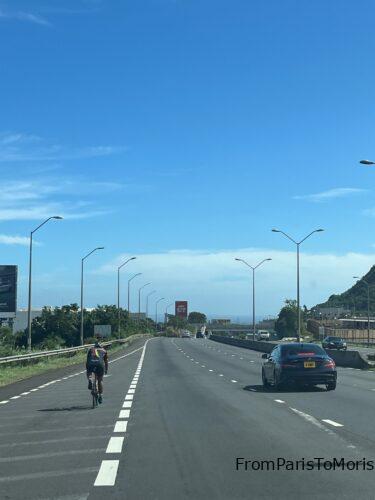
A car is essential in Mauritius — public transport is poorly adapted to most expat residential areas.
Car
| Option | Cost | In euros |
|---|---|---|
| New car (small city car) | from MUR 1.1 million | ~€21,150 |
| Reliable second-hand car | MUR 250,000 – 400,000 | ~€4,800 – €7,700 |
| Long-term rental (insurance included) | from MUR 20,000/month | ~€385/month |
| Petrol (2 cars — city car + SUV, 2 fill-ups each/month) | ~MUR 10,000/month | ~€190/month |
Simple reference: 1 litre of petrol ≈ €1
My advice: for new arrivals, long-term rental is often smarter than buying. Insurance is included, no admin hassle, no depreciation to worry about.
Public transport
- Bus: MUR 20 – 44 per trip (~€0.40 – €0.85)
- Metro Express: MUR 40 adult (~€0.77)
- Taxi Tamarin/Grand Baie → Airport: ~MUR 2,500 (~€48)
👉 Read my article on what you should know when driving in Mauritius

5. School

⚠️ This is often the most underestimated expense for expat families.
Public school — accessible but not ideal for expat children
Public school is free and technically open to foreigners. In practice, very few expat families choose this option: teaching is mainly in English and Creole, the level is very different from European standards, and classes are often overcrowded. It’s a possible choice, but one that requires careful thought.
Also, many expats don’t know how long they’ll stay — if you move again, having your children in a familiar curriculum makes the transition much easier.
French private schools — the go-to choice for Francophone expats
Mauritius has several schools accredited by the AEFE (French Education Agency):
Official fees — École du Centre / Collège Pierre Poivre (2025–2026):
| Level | Monthly fee (MUR) | Monthly fee (€) |
|---|---|---|
| Nursery (small/middle section) | MUR 14,085 | ~€270 |
| Reception and primary | MUR 16,298 | ~€314 |
| Secondary | MUR 18,603 | ~€358 |
⚠️ First-year additional fees:
- Association membership: MUR 8,000 (~€154) per family
- First registration fee: MUR 36,000 (~€692) per child
⚠️ Additional running costs:
- School supplies (varies by level)
- Insurance
- School canteen
- School van / transport
- Extra-curricular activities
Other French schools:
- École du Nord (Mapou): similar fees, nursery to Year 9
- École Paul et Virginie (Tamarin): similar fees, nursery and primary
- Lycée La Bourdonnais (Curepipe): nursery through to final year
- Lycée des Mascareignes: secondary (registration MUR 50,000)
- École de l’Ouest (Pierrefonds/Beaux Songes): opened August 2025
English-language international schools
- Northfields, Bocage, West Coast International: €5,000 – €8,000/year
- Registration fees: MUR 45,000 – 75,000 depending on the school
⚠️ Important: places are limited. Start the enrolment process 6 to 12 months in advance — sometimes more.
My advice: your choice of school often determines where you’ll live. Think about it before you start house hunting. Try doing the school run at rush hour to get a realistic feel for the commute.
👉 My comprehensive guide to the education system in my dedicated article on schools in Mauritius
6. Healthcare and Insurance
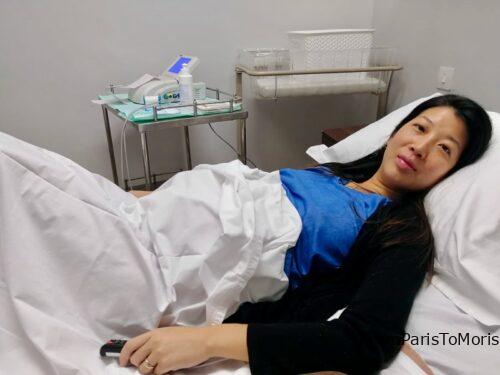
Private healthcare in Mauritius is of good quality. Public hospitals are free for Mauritian citizens but charge non-citizens. Expect longer waiting times, and there’s a chance staff will speak to you in Creole.
Medical consultations
| Type | Price (MUR) | Price (€) |
|---|---|---|
| GP | MUR 1,500 – 2,000 | ~€33 – €38 |
| Specialist | MUR 2,000 – 5,000 | ~€38 – €96 |
Health insurance
- Private health insurance: MUR 8,000 – 20,000/month (~€155 – €385)
Prices vary significantly depending on coverage, age and the number of people covered.
My choice after 7 years in Mauritius: MSH International — after trying CFE and SWAN.
👉 I compared everything for you — read my full health insurance review
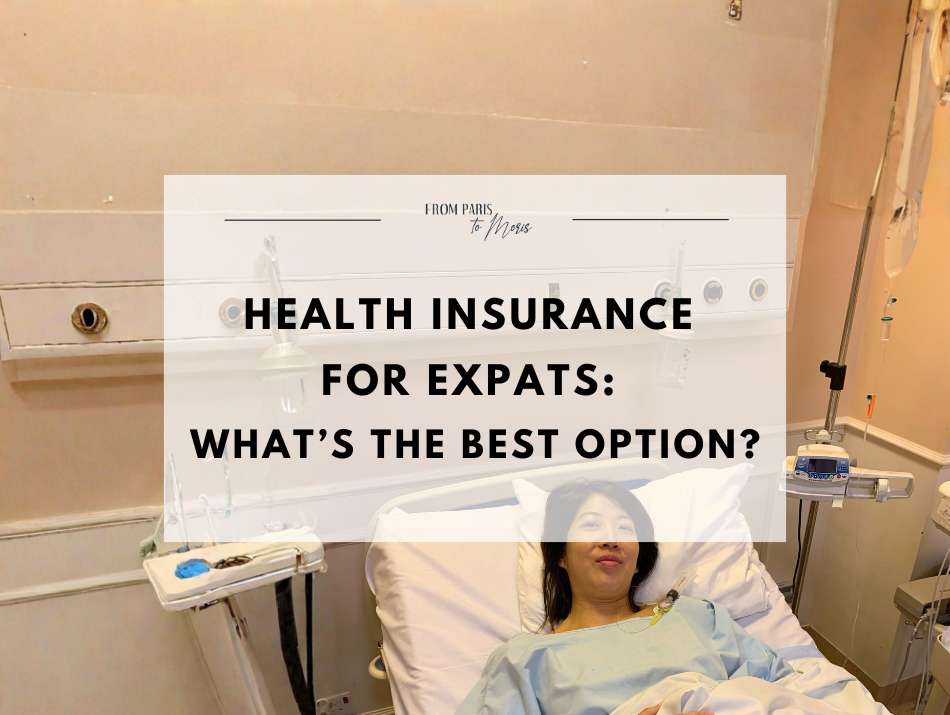
⚠️ Important: some medical procedures cannot be performed in Mauritius and require travel to Réunion or mainland France — make sure your insurance includes medical repatriation. Local Mauritian insurers may suggest treatment in India as a cheaper alternative for certain procedures.
7. Monthly Budget Summary
⚠️ These figures are indicative and may vary depending on your lifestyle, area of residence and spending habits. They are based on my personal experience and data available in 2026.
For a couple without children
| Expense | Budget (MUR) | Budget (€) |
|---|---|---|
| Housing (2-bed apartment) | 30,000 – 50,000 | ~€580 – €960 |
| Groceries | 20,000 – 30,000 | ~€385 – €580 |
| Bills (electricity, water, internet) | 5,000 – 12,000 | ~€96 – €230 |
| Transport (1 car rental) | 20,000 – 25,000 | ~€385 – €480 |
| Health (insurance + consultations) | 10,000 – 20,000 | ~€192 – €385 |
| Dining out / leisure | 10,000 – 20,000 | ~€192 – €385 |
| TOTAL | ~MUR 95,000 – 157,000 | ~€1,830 – €3,020 |
For a family of 4 (2 school-age children)
| Expense | Budget (MUR) | Budget (€) |
|---|---|---|
| Housing (3-bed house) | 55,000 – 100,000 | ~€1,060 – €1,920 |
| Groceries | 40,000 – 50,000 | ~€770 – €960 |
| Bills | 8,000 – 15,000 | ~€154 – €290 |
| Transport (2 car rentals) | 30,000 – 40,000 | ~€577 – €770 |
| School (2 children — French system) | 30,000 – 40,000 | ~€577 – €770 |
| Health (family) | 15,000 – 30,000 | ~€288 – €577 |
| Dining out / leisure | 15,000 – 25,000 | ~€288 – €480 |
| TOTAL | ~MUR 193,000 – 300,000 | ~€3,715 – €5,770 |
8. What Makes It Worth It — Tax Advantages
Mauritius isn’t all expenses. Here’s what you gain in return:
✅ 15% flat income tax — no progressive taxation
✅ No dividend tax
✅ No property tax
✅ No wealth tax
✅ No winter ☀️
✅ Real safety
✅ Quality of life — hard to put a price on
✅ Weekends that feel like holidays
My Honest Take After 7 Years in Mauritius
Yes, it’s expensive. And it’s getting more expensive — I won’t pretend otherwise.
But when I look at what I get in return — the pace of life, the sunshine, the safety, the nature, the favourable tax system, the warmth of the people — I don’t regret a single day.
The key is preparation. Those who arrive in Mauritius without doing the maths are often disappointed. Those who come with a realistic budget and a clear professional situation live very well.
What really makes the difference:
- The area where you settle
- Your spending habits (local vs imported)
- Your professional situation (income in euros or rupees)
- Your type of residence permit
Planning Your Move to Mauritius?
Got questions about your budget, your permit or the paperwork? I’ll help you clarify everything in a 1-hour video call.
👉 Book your coaching session — €50
Sources: PropertyCloud Mauritius Real Estate Index 2026, École du Centre (official fees 2025–2026), Expat.com, Smart Traveller, personal field experience.